


Motor Control devices provide the electrical control required to run a given motor. There are three main types of motor controllers: contactors, thermal overloads, and manual motor starters. Contactors provide remote electronic switching of electrical circuits, and thermal overloads provide overload protection for the electrical circuits. Manual motor starters provide manual switching of the circuits while also offering short circuit protection and thermal overload protection.
We offer a comprehensive selection of high-quality motor controls from industry leaders such as LSIS and FMX.
Motor Controls
OVERVIEW

Contactors and Overloads

Contactors and Mini Contactors
• 6 to 800 Amps
• 2, 3, or 4 Pole Options
• N/O and N/C Options
• 50/60 Hz Coils
• Coil Voltage Options up to 575VAC
• UL508 6 and 8 Pole Options Available for DC Applications

Overload Relays
• 0.1 to 800A Overload Range Depending on Model
• 2 or 3 Pole Options
• Trip Class 10

Accessories Include: Auxiliary contact blocks, surge suppressors, link modules, reverse wire kits, replacement coils, electronic modules, mechanical interlock blocks, mounting brackets, lugs, timer units, and insulation barriers
Manual Motor Protectors
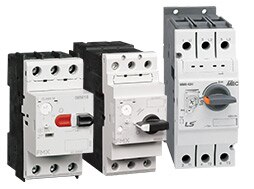
• Up to 100kA Interrupt Rating
• 0.1 to 100A
• Trip Class 10
• IP20 Finger-Safe Terminals

Accessories include: Handles, bus bars, auxiliary contact blocks, link adapters, mounting adapters, shunt and undervoltage releases, and trip alarm switches
Enclosed Starters

Enclosed DOL Motor Starters
• 0.4 to 112A Current Trip Range
• 1.1 to 104 Starter FLA
• Single and Three Phase Options
• Trip Class 10
• Metal, Polycarbonate, Steel, and Stainless-Steel Enclosures

Enclosed Combination Motor Starters
• Manual Motor Starter, Molded Case Circuit Breaker, and Fusible Disconnect options
• Input Voltage Options up to 460V
• UL Types 1, 3R, 4, 4X, and 12 Available
• Polycarbonate, Mild Steel, and Stainless-Steel Enclosures

Enclosed Soft Starters
• Up to 1400A
• Three Phase Input and Output
• Input Voltage Options up to 460V
Applications
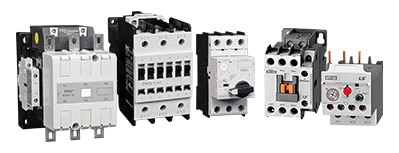
What are Motor Controls?
Motor Controls are used to make and break the electrical circuits powering a motor. This control allows an operator to turn the motor on and off, but it also can mean control of the acceleration and deceleration as well as a means of thermal overload and short circuit protection.
What Types of Motor Controls are Available?
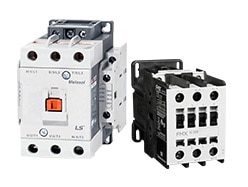
Contactors
Contactors are switches that allow for the making and breaking of electrical circuits. The contactor is electrically controlled, and as such it does not require direct interaction from the operator to turn the circuit on or off. Thermal Overload Relays can be used in conjunction with a contactor to provide thermal overload protection. The overload relays heat up over time and open the circuit before damage occurs to the motor.
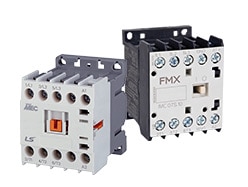
Mini Contactors
Miniature Contactors are similar to regular contactors. They are switches that make and break electrical circuits. However, mini contactors are smaller contactors that are generally rated for less than 25A.
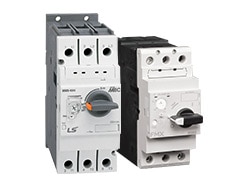
Manual Motor Protectors
Manual Motor Protectors (MMP), also known as Manual Motor Starters (MMS) or Motor Circuit Protectors (MCP), provide a direct means of making or breaking a circuit. Their basic function is that of an ON/OFF switch, and unlike a contactor they cannot switch the circuit on or off without direct interaction. In addition to making and breaking, the MMP also acts as thermal overload and short circuit protection.

Direct-On-Line Motor Starters
A Direct-On-Line (DOL) starter is a direct means of turning a motor on or off. This is useful in situations where a motor needs to be shut down without turning off power to other circuits, such as during maintenance.

Combination Motor Starters
A Combination starter is a combination of devices that at a minimum include a magnetic starter, thermal overload protection, short circuit protection, and a means of disconnection. For example, this can include contactors with overload relays and fusible disconnects or circuit breakers
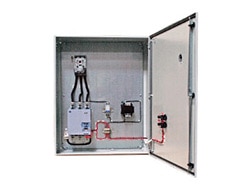
Enclosed Combination Soft Starters
An Enclosed Soft Starter is a combination of devices that at a minimum include a soft starter, thermal overload protection, short circuit protection, and a means of disconnection. Soft Starters are solid state devices that allow the acceleration and deceleration of a motor to be controlled. This is useful for motors where an across-the-line start is not desired and/or may cause damage or injury. The Soft Starter limits the high inrush currents on motor startup and protects the motor.
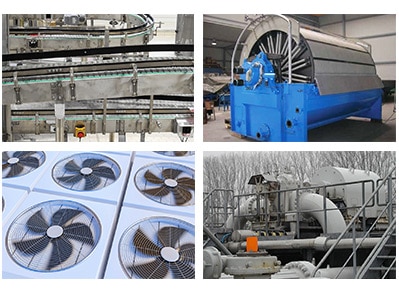
Where are Motor Controls Used?
Motor controls are used in virtually every industry. Some examples include:
• Conveyor Belts
• Fans/Exhausters
• Centrifugal Pumps
• Dryers and Rotary Ovens
• Stirrers/Mixers
• Granulators/Palletizers
• Process Dosing Pumps
• Rotary Filters
Who Uses Motor Controls?
Motors are used in almost all industries, and as a result motor controls also see widespread use. Some of these industries include:
• Oil and Gas
• Food and Beverage
• Mining
• Power Generation
• Heating, Ventilation, and Air Conditioning (HVAC)
• Material Handling
• Cement

Selecting
Selecting Motor Controls
There are a few important factors to consider when selecting the motor controls for your applications. Make sure to keep the following in mind when making your choices:


Do You Know Your Full Load Amps?
The Full Load Amps (FLA) rating of the AC Drive must meet or exceed the FLA of the motor. To properly determine your AC Drive needs, you must size the drive based on Amps:
• Identify the Full Load Amps (FLA)* of the motor
• Select the AC Drive that meets or exceeds this FLA rating
Full Load Amps (FLA) refers to the current of the motor at its rated load and voltage. It is equal to the amps the motor draws while producing the rated output horsepower. For more information on determining your FLA, view this Application Note entry.

What Coil Voltage Do You Need?
The Coil Voltage of the motor control device that you choose should match the voltage of the control circuit that will power the device. This can be the same as your line voltage, but it can also be independent of the line voltage and unrelated to your motor’s voltage. We offer common coil voltage options such as:
• BACnet is designed for Building Automation and Control systems and can control lighting, HVAC, security access, and fire detection systems
• 12VDC, 24VDC, 24VAC, 110VDC, 120VAC, 208-240VAC, 400-480VAC

What is Your Motor’s Input Voltage?
It is important to know your motor’s input voltage when selecting your motor control device. Improperly sizing your motor controls can lead to damage to equipment and even to injury. Ensure that your motor’s input voltage does not exceed the input voltage rating of your chosen motor controls.

What Overload (O/L) Range Does Your Application Require?
Ensure that the Full Load Amp rating of your motor falls within the O/L Range of the motor controls you select. Pulling more amps than the overload range leads to tripping of the device in order to protect the motor. Selecting an overload range below your Full Load Amps will likely result in nuisance tripping, and selecting an overload range much higher than your Full Load Amps can result in a failure to properly detect overloads.

Interrupt Rating
Some forms of motor control include short circuit protection. If you choose to use motor controls that include short circuit protection, such as a manual motor starter, the interrupt rating will identify the maximum current that can successfully be interrupted without resulting in damage.
Accessories
We carry a wide variety of accessories to go along with our robust selection of motor controls. Some of these accessories include the following options:


Auxiliary Contact Blocks
Auxiliary contact blocks are secondary switching devices. These auxiliary contacts are closed when the motor starter is activated and can be used to turn on a device in addition to the motor simultaneously.

Link Modules
Link Modules provide an electrical and mechanical connection between a manual motor protector and a contactor. These accessories simplify wiring and reduce wiring space.

Surge Suppressors
Surge Suppressors provide a place for voltage spikes to go when a contactor coil is de-energized. This negates the voltage accumulation that is typically associated with the coil de-energizing.

Reverse Wire Kits
Reverse Wire Kits make it simple to add an additional contactor to enable a motor to run in reverse.