OVERVIEW


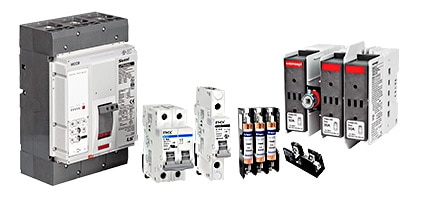
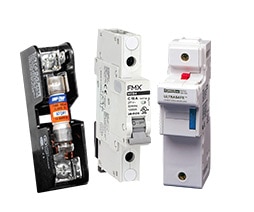
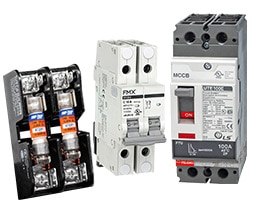
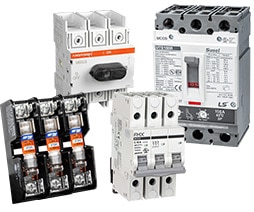
Circuit Protectors provides protection against electrical faults. Protection options include fuses, miniature circuit breakers, molded case circuit breakers, and disconnect switches. Different devices and components serve a variety of applications needs from supplementary to main service entrance protection and must be selected based on type of protection required for a specific application. We sell devices that adhere to UL standards and are manufactured by some of the most reputable companies and brands including Mersen, LSIS, and FMX.


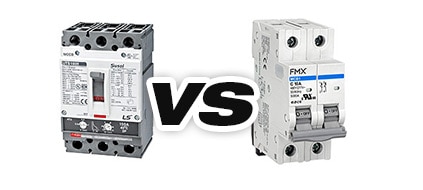
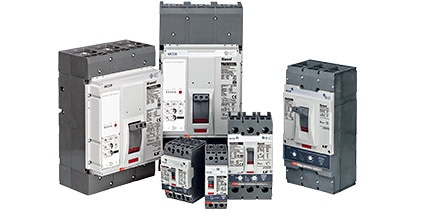
Molded Case Circuit Breakers

MCCBs are available for feeder, branch, and supplementary protection. These combine both short circuit and overload protection. Some models of MCCBs feature adjustable trip units, and all models are resettable.

• UL 489 for Molded Case Circuit Breakers
• 15-1200 Amp models
• Rotary Handles, Flange Handles, and Cables available
• Auxiliary and Alarm Switches, Locking Devices, Shunt and Undervoltage Trips Available
• Optional Adjustable Trip Units
Fuses and Fuse Holders

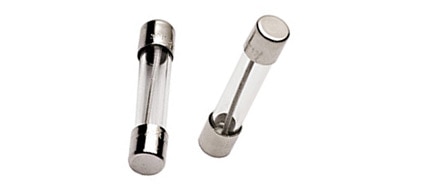
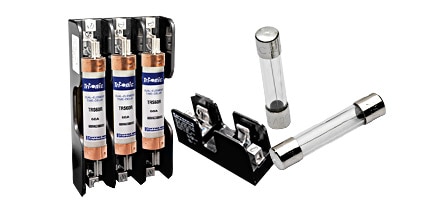
Fuses are highly current-limiting, blow in the event of a short circuit, and offer arc flash protection. Fuses are available that are applicable for feeder, branch, and supplementary protection, and they offer both short circuit and fixed overload protection..

• UL 248 for Low-Voltage Fuses
• Class CC Fuses from 0.1 to 30 amps
• Midget Fuses from 0.1 to 30 amps
• Class J Fuses from 1 to 600 amps
• Class RK5 Fuses from 0.1 to 600 amps
• Class RK1 Fuses from 0.1 to 600 amps
• Class L Fuses from 100 to 6000 amps
• 1/4" to 1-1/4” Glass and Ceramic Fuses from 1/2 to 30 amps
• 5mm x 20mm Glass Fuses from 1/4 to 15 amps
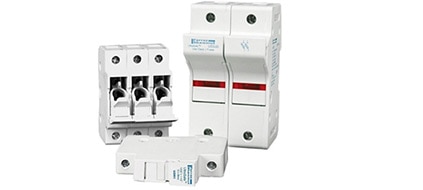
• Complete selection of Fuse Blocks and Fuse Holders


Disconnects

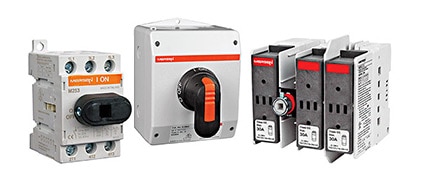
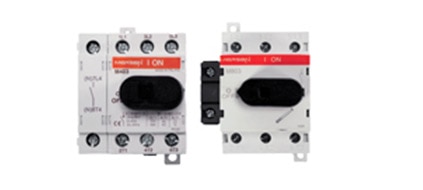
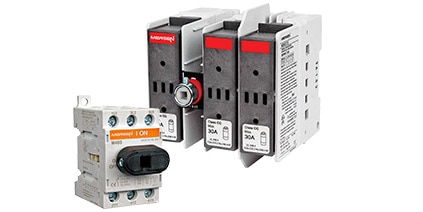
Disconnect options are available for feeder, branch, and supplementary protection. Otherwise known as Disconnect Switches or Break Switches, Disconnects ensure that a circuit is de-energized completely. This certainty allows for safe maintenance of equipment. Fusible disconnect options add circuit protection when coupled with appropriate fuse.

• UL508 Load Break Switches
• UL508 Enclosed Load Break Switches
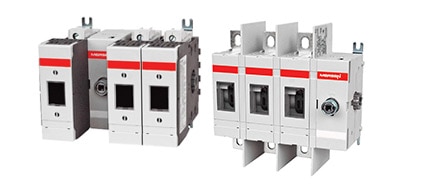
• UL98 (service entrance-rated) Fusible Disconnects
• UL98 (service entrance-rated) Non-Fusible Disconnects
• UL508i Solar DC Isolators


Miniature Circuit Breakers and Supplementary Protectors

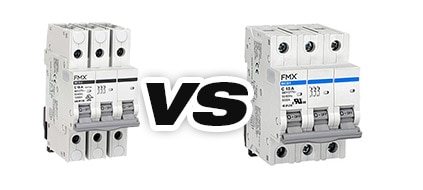
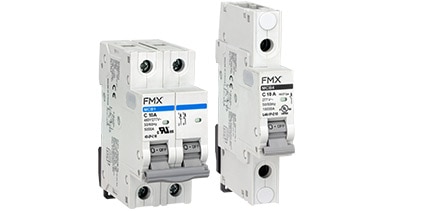
MCBs are appropriate for branch and supplementary protection. These devices trip during short circuit and overload conditions. MCBs have fixed trip settings and are resettable.

• UL489 MCBs 1-63 amps
• UL1077 Supplementary Protectors 1-63 amps
• Circuit Breaker Enclosures


Motor Circuit Protectors

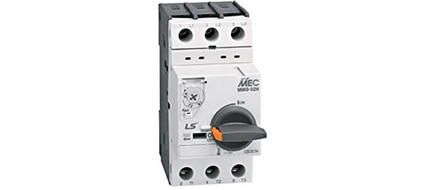
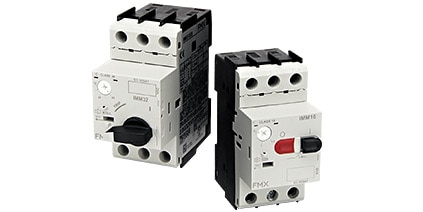
(or Manual Motor Starters, Manual Motor Protectors) Motor Circuit Protectors provide short circuit and overload protection for motor control circuits. Known also as Manual Motors Starters and Manual Motor Protectors, MCPs combine this protection affordably with the ability to switch motors ON/OFF.

• MCPs range from 0.1 to 100 amps
• Enclosed options available


 APPLICATIONS


What is Circuit Protection?

Circuit Protectors are safety devices that protect electrical circuits from either the overload of electrical currents or from short-circuits. Acting as a weak link in a circuit, the circuit protector prevents the burning of wire insulation that can ultimately lead to greater dangers such as fire. Circuit protection devices differ in how they operate, but they all share the same fundamental purpose of redirecting the surge of electrical power. We sell circuit protection devices in four distinct categories.


Type of Protection

MCCB: Short Circuit and Overload. Can be reset once fault is removed. Optional adjustable trip units. Optional handle accessories enable use as a disconnect.
Fuses/Fuse Blocks: Short Circuit and Overload. Blown fuses must be replaced. Can function as a disconnect when used in conjunction with a Fusible Disconnect.
Load Break Switches & Non-Fusible Disconnects: Provide means of safely disconnection electrical circuits. Short Circuit/Overload protection must be provided separately
MCB: Short Circuit and Overload. Can be reset once fault is removed.
Motor Circuit Protector: Short Circuit and Overload of motor circuits. Optional handle accessories enable use as a disconnect.


Where is Circuit Protection Used?

Circuit Protection is utilized for any electrical circuits. Some examples include:

• Industrial Control Systems
• HVAC Systems
• Lighting
• Wireless Communication Systems
• Medical Equipment


Who uses Circuit Protection?

Our circuit protectors are designed and optimized for the industrial market. While some industries may have stricter requirements for circuit protection than others, virtually all of them make use of circuit protectors as they are obligatory safety features. Industries where circuit protectors are prevalent include:

• Industrial Control
• Heating and Air
• Building Control
• Solar
• Marine & Offshore
• Alternative & Renewable Energy
• Utilities
• Automotive
• Rail Transportation


 SELECTING


How to select the correct Circuit Protector?

Choosing the correct form of circuit protection has a variety of benefits including decrease of development and maintenance costs, helping to negate the need for a redesign, and even a more valuable or practical system overall.

Though there are a multitude of factors to consider, these are some of the questions you want to be able to answer before buying:
• Current Rating
• Voltage
• Interrupt Rating
• Number of Poles
• Trip Characteristics
• Type of Protection

Ultimately, refer to applicable trip charts to properly select your circuit protection. Make sure to adhere to all applicable local, national, and industry laws, codes, and standards.


What Are Your Electrical Circuit Requirements?


Current Rating

Determine the current carrying capacity of your circuit and choose protection that is lower than or equal to that value in rated amperage.


Voltage

The voltage rating of the circuit protection you choose should meet or exceed the circuit voltage. It must never be lower than the circuit voltage.


Interrupt Rating

Also known as a Breaking Capacity, the Interrupt Rating is the current that a circuit breaker or a fuse can successfully interrupt without damage.


How Many Poles Are Needed?


Single Pole

(SP) provides switching and protection for a single phase of a circuit. Used for: Single phase circuit


Double Pole

(DP) provides switching and protection both for a phase and the neutral. Used for: Single phase circuit


Triple Pole

(TP) provides switching and protection for three phases of the circuit. Used for: Three phase circuit


Trip Characteristics

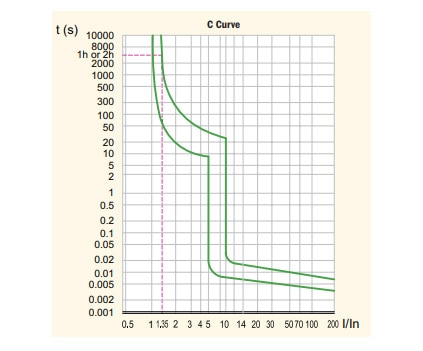
Different devices trip in different ways. Always refer to the applicable trip curve when determining desired trip characteristics

Fuses
• Fast Acting: Trips or blows almost instantly when current becomes too high.
• Time Delay: Ideal for handling inrush from transformers or motor starting without blowing.
Miniature Circuit Breakers
• B Curve – For resistant circuits (Control circuits, lighting, and more)
• C Curve – For medium inductive loads (Coils, control panels, lighting, and more)
• D Curve – For highly inductive loads (Motors, transformers, and more)
Motor Circuit Protectors
• Trip Class 10


Short Circuit versus Overload

Short Circuit: A short circuit occurs when a connection is made between points of a circuit with lower resistance than usual.
Overload: Overload occurs when equipment draws too much power through a circuit for a prolonged period.


Molded Case Circuit Breakers (MCCB) and Miniature Circuit Breakers (MCB)


MCCB versus MCB

Circuit Breakers automatically open a circuit in the instance of a short-circuit or overload event. It also acts as a means of manual circuit disconnect. The major difference between the two types of circuit breaker is that MCCB have a far greater interrupt rating than MCB. All our MCCB are rated at 600VAC.

Additionally, optional handles allow an MCCB to be used as a means to safely disconnect an electrical circuit.

MCB UL489 versus UL1077 (Supplementary)

Does your application require branch protection or secondary protection for a specific appliance or piece of equipment? The UL1077 is only supplementary protection while the more versatile UL489 is a miniature circuit breaker and can be used for branch or supplementary protection. Use a UL 1077 protector only in a situation in which you could remove it from the circuit and still maintain proper protection.

UL489 vs UL1077 AppNote


Fuses


Choosing a Fuse

Fuses offer the highest protection against faults and arc flash. Due to their destructible nature, fuses must be replaced after being blown. There are many fuse types that can be utilized based on application requirements.

We offer a variety of fuses including both fast acting and time delay Midget fuses and Classes CC, J, RK, and L fuses.

Fuse Holders

In addition to fuses, we offer corresponding fuse holders:
• Class CC – 1-3 Poles, 30A max
• US Series – 1-3 Poles, 60A max
• Midget – 1-3 Poles, 30A max
• Class J – 1-3 Poles, 600A max
• Class RK – 1-3 Poles, 600A max


Disconnects


Choosing a Disconnect Switch

A disconnect ensures that the electrical circuit is fully de-energized so that it can safely be serviced. Different types of disconnect switches serve different types of applications with a variety of ratings, mounting options, construction, and certifications.


Load Break Switches

All our load break switches are padlockable. In addition, we offer Enclosed switches which provide protection for both the device and for personnel.
We stock some of the most compact industrial-grade switches available, with features such as:
• Different mounting options including DIN-rail, surface, or door mounting.
• Finger-safe box terminals.
• Making or breaking loads up to 600V.
• Enclosed models with triple padlocking.

Fusible and Non-fusible Disconnects

Fusible and Non-fusible disconnects both range from 30 to 1200 amps and feature double breaking.


Motor Circuit Protectors (MCPs)


Affordable Four-in-One Functionality

Motor Circuit Protectors combine the functionality of a variety of components into a single space-saving option. They operate as a manual ON/OFF switch for motors, and they also offer short circuit, overload, and phase-loss protection.

Optional handle accessories also enable the use of an MCP to safely disconnect an electrical circuit.