
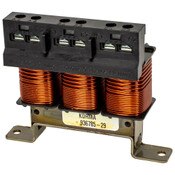
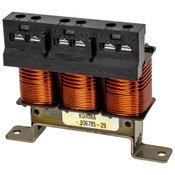
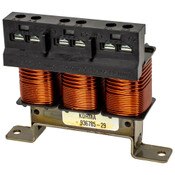
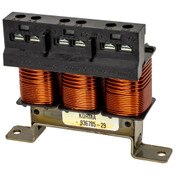
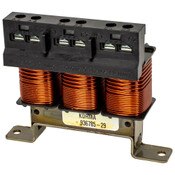
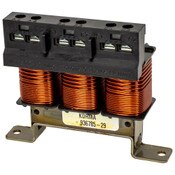
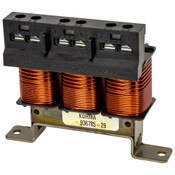
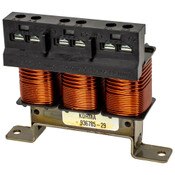


Line reactors are electrical components that help to protect variable frequency drives (also known as VFDs or AC drives) from transient voltages, line notching, harmonic distortion, cross-talk, and other causes of nuisance tripping inefficiencies. Our line reactors are available with three levels of impedance, multiple voltage classes, and a range of horsepower options.
Line Reactors for AC Drives
Narrow By
241 Products
241 Products
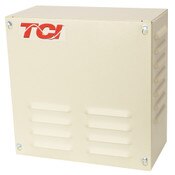
KDRMA21L1E01
TRANS-COIL AC LINE REACTOR, 3% IMPEDANCE, 0.25HP, 240V, 2.0 FLA, UL Type (NEMA) 1
 Drop Ship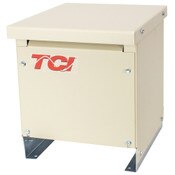
KDRMA21L1E3R1
TRANS-COIL AC LINE REACTOR, 3% IMPEDANCE, 0.25HP, 240V, 2.0 FLA, UL TYPE (NEMA) 3R
Drop Ship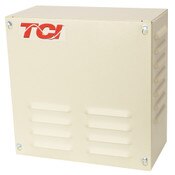
KDRMA21H1E01
TRANS-COIL AC LINE REACTOR, 5% IMPEDANCE, 0.25HP, 240V, 2.0 FLA, UL Type (NEMA) 1
Drop Ship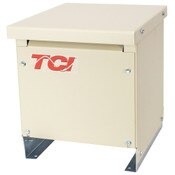
KDRMA21H1E3R1
TRANS-COIL AC LINE REACTOR, 5% IMPEDANCE, 0.25HP, 240V, 2.0 FLA, UL TYPE (NEMA) 3R
Drop Ship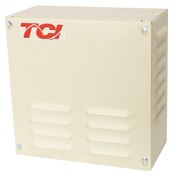
KDRMA1L1E01
TRANS-COIL AC LINE REACTOR, 3% IMPEDANCE, 0.25HP, 480V, 0.8 FLA, UL Type (NEMA) 1
Drop Ship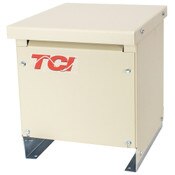
KDRMA1L1E3R1
TRANS-COIL AC LINE REACTOR, 3% IMPEDANCE, 0.25HP, 480V, 0.8 FLA, UL TYPE (NEMA) 3R
Drop Ship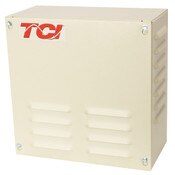
KDRMA1H1E01
TRANS-COIL AC LINE REACTOR, 5% IMPEDANCE, 0.25HP, 480V, 0.75 FLA, UL Type (NEMA) 1
Drop Ship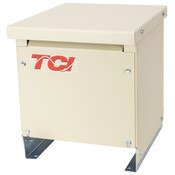
KDRMA1H1E3R1
TRANS-COIL AC LINE REACTOR, 5% IMPEDANCE, 0.25HP, 480V, 0.75 FLA, UL TYPE (NEMA) 3R
Drop Ship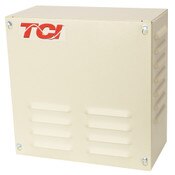
KDRMA2L1E01
TRANS-COIL AC LINE REACTOR, 3% IMPEDANCE, 0.33HP, 480V, 1.0 FLA, UL Type (NEMA) 1
Drop Ship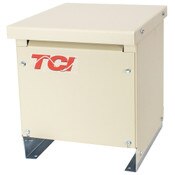
KDRMA2L1E3R1
TRANS-COIL AC LINE REACTOR, 3% IMPEDANCE, 0.33HP, 480V, 1.0 FLA, UL TYPE (NEMA) 3R
Drop Ship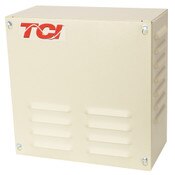
KDRMA2H1E01
TRANS-COIL AC LINE REACTOR, 5% IMPEDANCE, 0.33HP, 480V, 1.0 FLA, UL Type (NEMA) 1
Drop Ship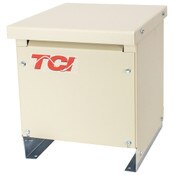
KDRMA2H1E3R1
TRANS-COIL AC LINE REACTOR, 5% IMPEDANCE, 0.33HP, 480V, 1.0 FLA, UL TYPE (NEMA) 3R
Drop Ship
KDRMA22L1E01
TRANS-COIL AC LINE REACTOR, 3% IMPEDANCE, 0.5HP, 240V, 3.0 FLA, UL Type (NEMA) 1
Drop Ship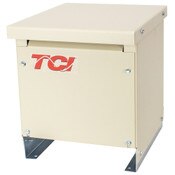
KDRMA22L1E3R1
TRANS-COIL AC LINE REACTOR, 3% IMPEDANCE, 0.5HP, 240V, 3.0 FLA, UL TYPE (NEMA) 3R
Drop Ship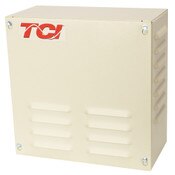
KDRMA22H1E01
TRANS-COIL AC LINE REACTOR, 5% IMPEDANCE, 0.5HP, 240V, 3.0 FLA, UL Type (NEMA) 1
Drop Ship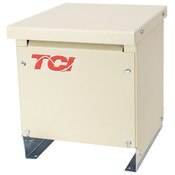
KDRMA22H1E3R1
TRANS-COIL AC LINE REACTOR, 5% IMPEDANCE, 0.5HP, 240V, 3.0 FLA, UL TYPE (NEMA) 3R
Drop Ship OVERVIEW


Three Impedance Levels


Two Voltage Classes


Specifications
| Ambient Temperature | 122°F (50°C) - Open; 104°F (40°C) - Enclosed |
| Altitude (Maximum) | 6,000 feet (2,000 meters) - Derating necessary above 6,000 feet |
| Basic Frequency | 50/60Hz |
| Short Term Overload Rating | Tolerate 200% rated I for a maximum of 3 minutes |
| Agency Approvals | cULus Listed, CE Marked |
| Input and Output | Available for either the line or the load side of a VFD |
| Enclosure Options | UL Type 1 and Type 3R |
Impedance Levels
TCI Line Reactors have been designed to provide the best protection for both your drive and your application. Input impedance can significantly improve drive performance. Select impedance based on the guidelines below:
Low Z (3% Impedance)
Reduction in nuisance tripping caused by:
• Transient voltages caused by capacitor switching
• Line notching
• DC bus overvoltage tripping
• Inverter overcurrent and overvoltage
Additional benefits include:
• Lowering injected percentage of harmonic current
• Improving true power factor
• Reducing cross-talk between drives
• Adding impedance to drives with DC link chokes/reactors when more impedance is desired due to a relatively stiff source
High Z (5% Impedance)
Additional benefits of high impedance line reactors include:
• Help prevent drive component damage
• Provide maximum harmonic mitigation without adding capacitance
• Further improve true power factor
• Add impedance to drives without DC link chokes/reactors when more impedance is desired due to a relatively stiff source
• All benefits of “Low Z” models also apply
Available as Chassis Unit or With UL Type Enclosure

Chassis Unit
A chassis unit consists of only the line reactor with no protective enclosure. Chassis units are great options if you plan on mounting the line reactor inside of an existing enclosure.

UL Type 1
UL Type 1 units are line reactors installed inside a Type 1 enclosure. UL Type 1 enclosures are intended for indoor use to provide protection against contact with the enclosed equipment.

UL Type 3R
UL Type 3R units are line reactors installed inside a Type 3R enclosure. UL Type 3R enclosures are intended for either indoor or outdoor use. These enclosures provide a degree of protection against falling rain and are undamaged by the formation of ice.
Applications

TCI line reactors are constructed with durability in mind and can be used on both the input and output of a VFD. When used on the output of a drive, these line reactors reduce voltage distortion at the motor terminals, extending the service life and minimizing insulation stress of any motor.
Where?
Line reactors are a useful addition to systems using VFDs. Some examples of applications that benefit from a line reactor include:
• Pumps
• Irrigation Fields
• HVAC Chillers
• Conveyors
• Extruders


Who?
Due to their use with variable frequency drives, many industries benefit from incorporating line reactors in their control systems. Some of these industries include:
• Heating, Ventilation, and Air Conditioning
• Oil and Gas
• Agriculture
• Steel
• Machining
• Water, Wastewater, and Power
• Pulp/Paper
Why?
Line reactors can be used on either the input or output side of the VFD. The basic effect of the reactor in terms of adding impedance to the line remains the same, but each application serves the drive in a different way.

Input (Line) Side
When installed on the input side, the line reactor serves to reduce harmonics. This reduction of harmonics results in an increase of power quality. Additionally, the line reactor can add protection against transient voltages that can result in nuisance tripping.

Output (Load) Side
A reactor installed on the output side of a VFD is referred to as a load reactor. Load reactors provide a buffer between the drive and the motor to reduce voltage stress on the motor and enable it to run cooler. This is especially useful on non-inverter duty motors and when the wiring between the drive and motor is greater than 500 feet.
Benefits
Prevent Drive Shutdown
Proper application of a reactor can protect a VFD against a variety of power factors that can lead to nuisance tripping. Line (or voltage) notching and transient voltages on the AC power lines can result in under or overvoltage condition of the DC bus. These conditions can cause VFDs to shut down without warning. The addition of a line reactor will limit the magnitude of these voltage issues and prevent trips and component failures.

Reduce Harmonic Distortion
The addition of a line reactor will reduce input voltage distortion, also known as harmonic distortion. Harmonic distortion is caused by the non-linear input current of AC drives and will adversely affect other equipment connected to the same input supply. Harmonic distortion can cause increased power consumption and lead to inefficient systems. The reactor reduces the peak currents and lowers the harmonic current distortion. High peak currents may cause distortion of the voltage waveform. The reduction of those peak currents also reduces total harmonic voltage distortion at the point of common coupling.


Motor Protection
A VFD often produces a harsher, sharper waveform in the voltage supplied to the motor. When placed on the output (or load), a reactor serves to protect the motor and extend its life. The load reactor’s inductance reduces the voltage distortion by softening the waveform transitions. This is especially helpful for non-inverter duty motors..


Improve True Power Factor
Drive input currents rich in harmonics result in a decrease in total input power factor to the drive. The addition of a line reactor will reduce this harmonic content, thereby improving the total power factor.

Reduce Cross-talk
Cross-talk is best described as “voltage noise” produced between two electrical circuits. It occurs when a magnetic field from one circuit effects some signal change in a neighboring circuit. The impedance of a reactor can reduce this cross-talk to limit disturbances between circuits.